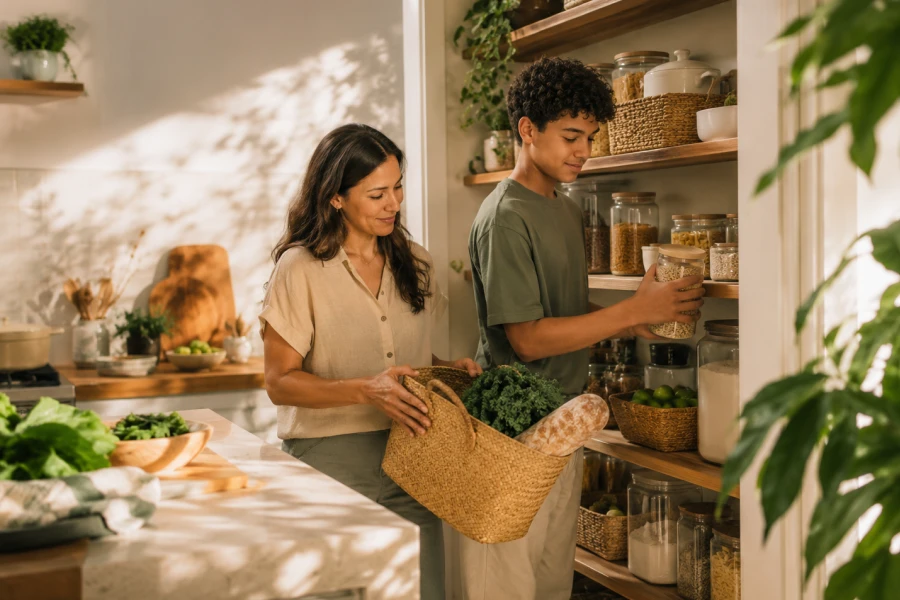
Smart pantry organization makes a kitchen feel calmer because it turns a crowded storage area into a useful daily tool. The aim is not to create shelves that cannot be touched. It is to build a clear system that helps you cook, shop, and reset with less effort. When pantry items have visible homes, you stop wasting time searching through stacks and bags. You also gain a better sense of what needs using, replacing, or moving. Small decisions about shelf placement can have a meaningful effect on daily routines. Start with the ingredients you use most and build outward from there. Let visibility and accessibility guide your choices before decoration enters the picture. A few dependable practical pantry solutions can make the whole kitchen work more smoothly. Order becomes valuable when it supports real life.
A clear pantry can do more than prevent duplicate purchases. It can help you notice meal possibilities that were already available. Seeing pasta, beans, grains, sauces, and spices together can spark a quick dinner idea. Visible snacks and breakfast options make mornings easier to manage. A well-placed baking shelf can invite spontaneous weekend projects. This is why grouping ingredients by use can be more helpful than arranging them only by package type. The pantry becomes a source of ideas rather than an area to avoid. Keep favorite staples where they are easy to scan. Make less-used specialty products visible enough that they do not disappear. Better visibility encourages more creative cooking with what you already own.
Perfectly matching containers are not the only path toward a useful pantry. Visibility matters more than uniformity when you need to find something quickly. Clear bins and open baskets can make flexible categories easier to manage. Original packaging often works best for ingredients that have cooking instructions or serving information. Decant staples only when it improves access, freshness, or shelf space. Use labels where they add clarity, not simply because every container needs one. A pantry should be easy for everyone in the home to understand. For a helpful foundation, use visible food storage methods that balance appearance with everyday use. A system is successful when you can find what you need immediately.
Small kitchens benefit most from making each shelf, basket, and door area work intentionally. Use vertical space by choosing stackable containers only where stacking remains easy to access. Group smaller packets in a basket so they do not get lost behind larger items. Keep heavy or frequently used products at a comfortable height. Reserve harder-to-reach areas for extras, seasonal supplies, and infrequently used ingredients. Shallow bins can help you see what is stored near the back. Door storage may work well for smaller items when it does not interfere with closing. Every inch should make daily tasks easier, not simply hold more things. A collection of small-space pantry tactics can turn limited storage into a practical advantage. Smart choices create more usable room than random additions.
Organization lasts longer when it includes a realistic way to recover after busy days. You do not need a long cleaning session every week. A five-minute pantry reset can return misplaced items and clear empty packaging. Choose one regular moment, such as before grocery shopping or after meal planning. Use it to scan for low staples, expired items, and ingredients that need using. Put new groceries behind older products whenever possible. Keep a small container for odd packets or open items that need attention soon. These tiny habits prevent clutter from becoming overwhelming. A reset should feel like part of the kitchen routine, not a separate project. Small maintenance steps create the consistency that makes a system sustainable.
Shared kitchens work best when the pantry layout feels obvious to everyone. Broad categories are often more useful than complicated rules. Give snacks, breakfast foods, cooking staples, and baking supplies their own recognizable areas. Use labels only where they genuinely improve understanding. Keep children’s snacks or everyday lunch items within appropriate reach when that supports the household. Make it easy for a partner, guest, or family member to help put groceries away. The more intuitive the system feels, the less one person has to manage it alone. A clear pantry can reduce small moments of friction throughout the week. Shared habits become easier when shared spaces make sense. Organization should help the household work together, not create a private system for one person.
The best storage plan is never completely finished because your life is not completely fixed. Your cooking style may change, your grocery habits may shift, or your household may grow. Let the pantry adapt as those routines evolve. Review the layout when something starts feeling inconvenient or crowded again. Move ingredients based on use rather than forcing yourself to work around an outdated plan. Keep the elements that are helping and revise the ones that are not. This flexible mindset makes organization less intimidating over time. You are not trying to preserve a perfect picture. You are building a kitchen that continues to support the way you live. That is the real value of a calm, practical pantry.




Leave a comment