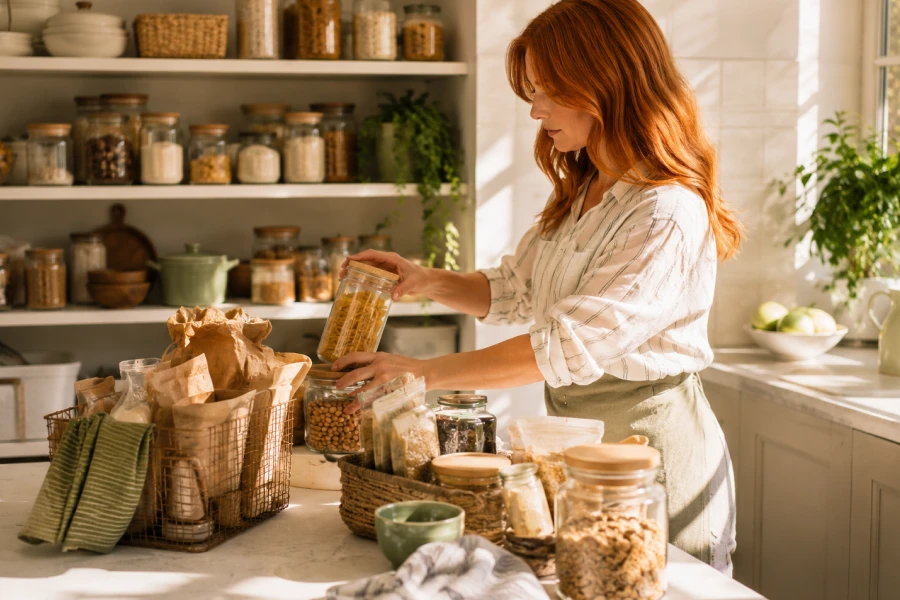
Kitchen decluttering habits can reduce the small frustrations that make dinner preparation feel harder than it needs to be. A crowded pantry often creates invisible work before any cooking begins. You search, shift packages, find duplicates, and still wonder what you actually have. Removing that friction does not require a perfect kitchen or a dramatic weekend overhaul. It requires a few repeatable decisions that make space for the ingredients you use most. Start by clearing the items that no longer belong in your daily rotation. Then group the things you keep in ways that reflect how you cook. This creates a kitchen that gives useful information instead of visual noise. A practical set of pantry reset routines can make that shift feel much more manageable. The goal is a space that supports you every day.
Storage tools can help, but they cannot solve a pantry filled with items you no longer use. Begin by checking dates, duplicates, and products that no longer match your cooking habits. Remove empty packaging, broken containers, and ingredients that have been sitting untouched for too long. This first edit creates a clearer picture of what you actually need to organize. It also prevents you from buying storage for food that should not stay. Be honest about your household’s preferences and routines during this process. A beautifully labeled ingredient that never gets used still takes up valuable space. Keep only the tools and foods that earn their place in the kitchen. Decluttering works best when it begins with decisions, not shopping.
Notice which pantry moments feel annoying or unnecessarily slow. Maybe snacks spill from overstuffed bags, or spices disappear behind taller containers. Perhaps lunchbox items are scattered across several shelves. These frustrations point directly toward the areas that need a better system. You do not need to reorganize everything at once. Solve one recurring problem, then observe whether the change actually helps. A shallow bin may make packets easier to reach. A lower shelf might make everyday ingredients more accessible. For targeted inspiration, explore low-friction storage ideas that respond to real kitchen problems. Organization should reduce irritation, not create extra rules to remember.
When you can see what is already in the pantry, grocery shopping becomes more focused. You are less likely to buy a third bag of something hidden in the back. You can build meals around ingredients that need to be used soon. A quick check before shopping can also reveal gaps in your most useful staples. This creates a more accurate list and reduces random purchases. Keep a small area for nearly empty items or ingredients that need replenishing. That visual reminder makes the next shopping trip easier to plan. Use baskets or trays to keep these items separate from your regular inventory. A clear smart grocery planning zone turns the pantry into a useful source of information. Better shopping begins with better visibility at home.
Large organization projects often stall because they feel too big to begin. Working one shelf at a time keeps the task focused and easy to finish. Empty the shelf, wipe it down, and decide what deserves to return. Group the remaining items by how often you use them and what they support. Move the items that belong elsewhere instead of forcing them to stay. Then place everything back with a little room for future groceries. This small approach helps you learn what kind of system works best. It also gives you visible progress quickly, which makes the next shelf easier to tackle. A completed shelf can create more momentum than a half-finished pantry makeover. Simple progress is still meaningful progress.
Weeknights often expose whether a kitchen setup is truly useful. When everyone is tired, complicated systems are usually the first thing to disappear. Keep the ingredients you reach for most in the easiest places to access. Store specialty items farther back so they do not interrupt the daily routine. Make snacks, breakfast basics, and dinner staples easy to spot at a glance. This reduces decision fatigue when you need to get food on the table quickly. It also helps others participate in the kitchen without asking where everything is. A dependable weeknight kitchen layout supports the moments when convenience matters most. Good organization protects your energy instead of consuming it. That is why the simplest systems often last the longest.
Pantries change because cooking changes throughout the year. Seasonal baking, school lunches, holiday hosting, and new meal routines all affect what you use. A quarterly review is usually enough to keep the space useful without making decluttering feel constant. Take a few minutes to remove expired items and return misplaced products to their zones. Notice which categories have become crowded and which shelves have empty space. Adjust based on how your household is living now. This keeps the system connected to reality rather than frozen in time. You do not need to start over each season. Small edits can keep the pantry feeling clear and workable. Consistency comes from revisiting, not from expecting perfection.




Leave a comment